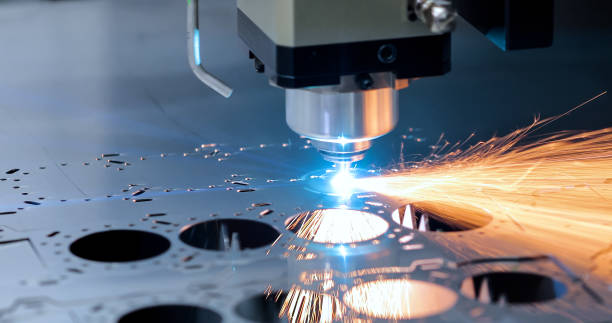
Precision Metal Stamping Parts Manufacturer in India.
Introduction
Precision components demand tight tolerances, repeatability, and structural reliability. As a trusted precision metal stamping parts manufacturer in India and experienced precision metal stamping manufacturer in India, we produce high-accuracy stamped components for automotive, aerospace, electronics, renewable energy, and heavy industrial sectors.
Our facility integrates advanced mechanical and hydraulic press systems, progressive die tooling, CAD/CAM-supported tool design, and structured quality inspection processes. From lightweight aluminium stampings to heavy-duty steel structural components, we manufacture parts that meet dimensional specifications, material integrity standards, and OEM-level performance expectations.
We operate as a direct manufacturer in India, offering custom development, batch production, and controlled quality assurance for industrial buyers.
Precision Metal Stamping Manufacturer in India - Products & Capabilities
Types of Precision Metal Stamping Parts We Manufacture
As a specialized industrial manufacturer and supplier, we produce:
- Progressive die stamped components
- Deep-drawn metal parts
- Electrical terminals and connectors
- Automotive brackets and shields
- Bus bars and conductive stampings
- PPrecision washers and fasteners
- Aluminium structural stampings
- Stainless steel precision parts
- Custom heavy-duty industrial stampings
Each part is produced with controlled tooling alignment and calibrated press force to maintain tolerance accuracy.
What is Precision Metal Stamping?
Precision metal stamping is a high-accuracy manufacturing process that converts flat sheet metal or metal coils into defined shapes using dies and press machines. Press capacities may range from medium tonnage systems to high-tonnage industrial presses depending on part geometry and material thickness.
The process may involve a single-stage operation or progressive multi-stage stamping where multiple forming steps are completed within one continuous cycle. This approach ensures consistent volume production with minimal variation.
Working Mechanism of Precision Metal Stamping
The stamping process typically includes:
- Blanking (Blanking is a cutting process where a flat metal piece is cut out from a larger sheet. The removed piece becomes the required part, while the remaining sheet is treated as scrap or reused.)
- Punching(Punching creates holes or cutouts in sheet metal using a punch and die. The removed material, known as a slug, is discarded, leaving precise openings in the workpiece.)
- Bending(Bending forms metal along a straight axis to create angles or shapes. It reshapes the sheet without removing material, commonly used for brackets and structural components.)
- Coining(Coining applies high pressure to compress metal within a die, producing fine details and sharp edges. It improves dimensional accuracy and surface finish.)
- Drawing(Drawing stretches flat sheet metal into a deeper or hollow shape using tensile force. It is commonly used to manufacture shells, enclosures, and cylindrical components.)
- Embossing(Embossing creates raised or recessed patterns on metal surfaces. It enhances structural strength, identification marking, or decorative appearance.)
- Flanging(Flanging bends the edge of a metal part, typically at a 90-degree angle. It improves strength, safety, and provides surfaces for fastening or joining.)
- Shearing(Shearing cuts metal along a straight line without forming chips. It is commonly used to produce rectangular or square blanks efficiently.)
- Trimming(Trimming removes excess material from a stamped or formed part. It is a finishing step that ensures accurate final dimensions and clean edges.)
Progressive die systems allow multiple operations in sequence, improving production efficiency and reducing secondary handling.
Tool design, die clearance, material selection, and press calibration directly influence part quality and dimensional repeatability.
Industrial Applications
Precision metal stamping is widely used across:
-
Automotive Industry :
Used for terminals, brackets, connectors, shields, bus bars, and structural components requiring durability and exact tolerances. -
Aerospace Sector :
Manufacturing of washers, clips, brackets, fasteners, and engine support parts where safety and tight tolerance control are critical. -
Electronics & Electrical :
Production of connectors, switch components, circuit breaker parts, fuse box components, and conductive elements. -
Renewable Energy :
Solar panel frames, inverter enclosures, mounting brackets, and controller components. -
Medical Devices :
Stamped components used in instruments, diagnostic equipment, monitoring devices, and support assemblies. -
Oil & Gas :
Washers, brackets, mounting hardware, and structural fittings designed for demanding environments. -
Agriculture & Industrial Equipment :
Deep-drawn shells, structural stampings, and heavy-duty machinery components.
Uses and Benefits
Precision stamping offers measurable advantages:
- High-volume production capability
- Tight dimensional tolerances
- Cost efficiency in large batches
- Reduced material waste
- Consistent repeatability
- Faster production cycles
- Lower secondary finishing costs
It supports both high-volume OEM supply and custom industrial requirements.
Raw Materials Used
Material selection determines required press force and performance characteristics. We manufacture components using:
- Mild Steel (IS grades)
- Stainless Steel (SS 304 / SS 316)
- Aluminium (industrial and commercial grades)
- Copper
- Brass
- Galvanized Steel
- CRCA Sheets
- Specialty alloys such as nickel and titanium (application specific)
Material certification and traceability are maintained for industrial compliance.
Customization Options
We provide:
- CAD/CAM-based tooling design
- Prototype development
- Custom die manufacturing
- Variable metal thickness processing
- Complex geometries
- Surface finishing (zinc plating, anodizing, powder coating)
- Secondary operations including tapping and deburring
- Short-run and high-volume production
Components are manufactured as per customer drawings, samples, or CAD files.
Manufacturing Process
- Engineering design & tooling development
- Die preparation and validation
- Sheet metal blank preparation
- Progressive or single-stage stamping
- Secondary operations
- Surface treatment
- Quality inspection
- Controlled packaging and dispatch
Every batch is produced under monitored process parameters.
Testing & Quality Control
Quality assurance includes:
- Vernier, micrometer, and gauge inspections
- Profile projector measurement
- Hardness and thickness verification
- Tool alignment checks
- Batch sampling and dimensional reporting
- Surface finish inspection
Manufacturing practices align with ISO-based quality systems and relevant IS standards for sheet metal components.
Compliance & Industry Standards
Production processes are aligned with:
- Indian Standards (IS) for sheet metal and fabrication
- ISO quality management practices
- Application-based OEM tolerance requirements
- Engineering fabrication norms
Compliance documentation is maintained for industrial clients.
Manufacturing Capacity
- Multiple mechanical and hydraulic press machines
- Progressive die stamping capability
- Medium to high-volume batch production
- Consistent repeat order supply
- Flexible production scheduling
- Ready stock for selected standard components
We operate as a direct precision metal stamping manufacturer in India, ensuring production control and traceability.
Infrastructure & Facilities
Our facility includes:
- High-tonnage stamping presses
- In-house tool room
- CAD/CAM design systems
- Surface finishing units
- Dedicated quality inspection area
- Skilled stamping technicians and engineers
Integrated infrastructure enables scalability and precision consistency.